
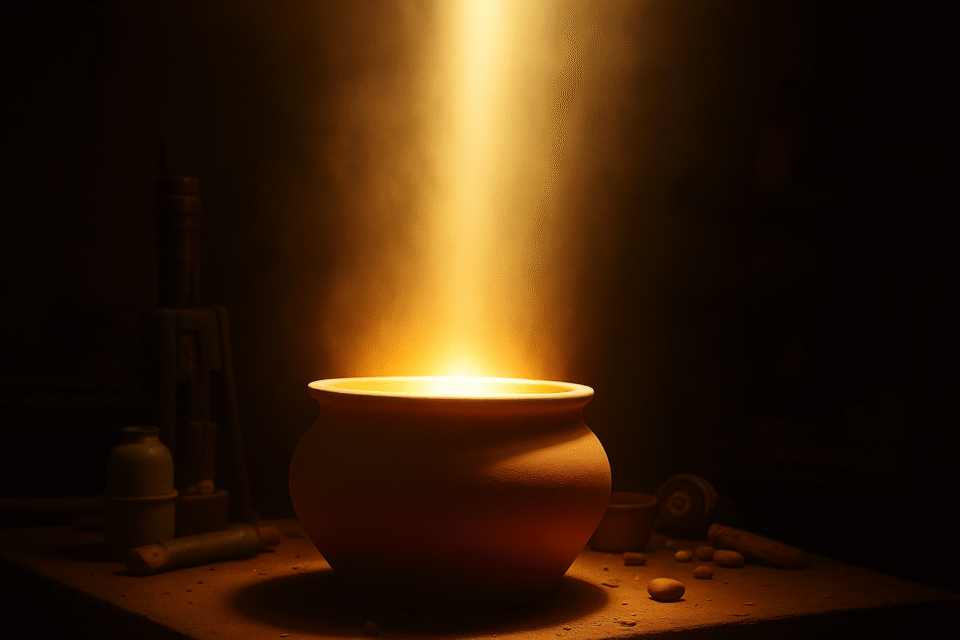
Starry Song, the shaman who possessed the gift of perpetuating the ancestral philosophy of his people through stories and chants, drew on his unfailing red stone-bowled pipe as if searching for the best words, and commented: “Truth has a high price. Payment is always due upfront. In many situations, it brings the discomfort of unwanted yet indispensable changes. It demands boldness and courage. Because they are not prepared, many are frightened by it or avoid it. Despite the discomfort, they forget, or do not yet know, that truth offers freedom, dignity, and peace in return. That is not little. However, few are ready to make these conquests the genuine priorities of life.” He observed, for a few moments, the dance of smoke before his eyes and then returned to his reasoning: “On the other hand, lies also have a price. They charge nothing at the entrance. They usually offer comfort and relief like a dangerous anaesthetic of indeterminate duration. They deceive by conveying the sensation that nothing will cost anything or that it will come almost for free. They say nothing about the hidden interest to be paid in the long term. The final price becomes exorbitant. In exchange, the lie offers the reverse of truth. It is the counterfeit of life and light.” He shrugged and suggested: “It is up to each person to choose which one they will pay.”
Seated in the rocking chair, Starry Song was talking with Aiyana, a young artisan who, like him, also belonged to the Navajo people. At twenty years of age, the young woman already displayed a rare skill in crafting ceramic objects. A resident of Jerome, located in the Black Hills mountains near Sedona, she exhibited her work in an art shop in the Haunted Village, as the town came to be known. Built around copper mining in the nineteenth century, it was abandoned in the 1920s after the tragic collapse of one of the mines and the consequent closure of the company that operated it. Everyone left. The city remained abandoned for decades. As many buildings remained intact, artists from the region, with great talent and little money, began occupying the empty houses at the end of the last century. Gradually, studios, cafés, and restaurants emerged. The place became a tourist attraction. Some artists, from painters to sculptors, from musicians to writers, from artisans to chefs, had their work recognized worldwide, thanks to their talents but also to the charm and magic of Jerome. Every time I travelled to Sedona, one of my favourite pastimes was dancing country music in one of the local bars. When returning to Rio de Janeiro, there was always at least one object by one of its artists in my suitcase. With olive-toned skin and black hair tied in braids, Aiyana wore beautiful dresses with patterns that evoked the rich culture of her ancestors. Honey-coloured eyes and a slender nose gave her an exotic and admired beauty. The young woman was there at the request of her grandmother, whose friendship with the shaman dated back to their youth.
Surrounded by older and already recognized artists, yet equally talented, Aiyana’s art had been overshadowed. There was little space left to exhibit her works in Jerome. Her career was developing far more slowly than she would have liked. Or deserved, in the artist’s opinion. She dreamed of placing her ceramics in famous galleries in London or New York. For that, she believed, she would need to live in a city where she could be in contact with influential people. Such places are expensive to live in. The young woman needed to save a good amount of money to move and support herself until her career took off. That was when, advised by a tourist with whom she had had a brief involvement, she produced pieces that appeared to have belonged to the inhabitants of Jerome during the copper mining era. Due to their rarity and enormous demand, these objects were very expensive. He promised to introduce Aiyana to antique collectors. And he did. She sold the collection of pieces aged through chemical processes. Since the buyer would keep them at home for his own enjoyment and perhaps show them to only a few friends, there would be no risk of future problems. Moreover, he argued, if the buyer was satisfied with the acquired objects, no harm had been done. Even if they were not genuine, the man would never be disappointed with those pieces. Ignorance protects, he assured. Both she and the collector were happy with the deal. There was nothing wrong with selling pleasure, the young woman reasoned. She was packed and ready. She would travel the next day. She would live in a city near San Francisco, where she would have the standard and rhythm of life she had always sought. Jerome was too small for her, she stated. She had no doubt that living in a cosmopolitan city would make it easier for her talent to be recognized. She emphasized that she was there only to comply with her grandmother’s request. She added that her conscience was clear and that she felt secure in the choice she had made. She considered the conversation closed, said goodbye, and left.
We were on the veranda of Starry Song’s house. Before the young woman had even turned the corner, the shaman murmured, as if speaking to himself, in an almost inaudible tone: “For every search, a reward…” There was compassion in his eyes. I asked if he meant that the young woman would find the reward for what she was seeking. Starry Song nodded yes and added: “Ignorance deceives about the reach of evil; it never offers protection.” I asked whether he was referring to the artist or to the collector. The shaman clarified: “To both, and to everyone. However, responsibility lies with whoever uses it to harm others.” I commented on Aiyana’s undeniable talent. I asked whether, in his opinion, the young woman would achieve the fame and fortune she desired. He nodded again and reflected: “However, all desires carry a price consistent with the method used to achieve them.” I pointed out that, without a doubt, Aiyana was an extraordinary artist. The shaman looked at me as if he were facing a child and dismantled my arguments: “An extraordinary artist lost in ordinary choices.”
I said I did not understand. Aiyana possessed the incredible gift of giving life to earth, of transforming clay into art, I argued. If for every search there exists a proper reward, it was only fair that she should find the recognition she deserved. She lacked no talent. Starry Song offered me a gentle smile and, as if still speaking to a boy, commented: “I refer to finding the reward appropriate to the search undertaken, not the one one expects to find. Life never makes mistakes. The genuine reward is not the illusion of worldly conquest, but exposure to the truth contained in the essence of the movement, often unadmitted by the seeker. When we ignore or disdain the fundamental elements of the search, the reward will seem strange. There will be nothing wrong. Simply accept, learn, and give thanks.” I said that those ideas seemed far too confusing to me. In the greatness of gentle gestures, typical of mature souls who carry within them the certainty that the bad path never leads to a good destination, in response he merely blew away the smoke from the pipe hovering before him. An ancestral gesture whose meaning speaks of the truth hidden behind the cloudy layers of the deceptions common to those who can only see what is immediate or lies on the surface of existence. He did not say another word.
Several years passed. I remembered this episode only once, when, during a trip, by chance, I learned of the exhibition of Aiyana’s most recent collection of pieces in prestigious galleries around the world. Eager, whether for a good deal or for a rare indulgence, dealers and collectors competed for each piece like refugees fighting for a place in the sun. In circles frequented by the influential and wealthy, owning a piece crafted by the designer was a sign of elegance and avant-garde taste. At astronomical prices, the entire collection was sold even before the opening exhibition in the capital, Washington. It would still travel through New York, London, Madrid, Paris, and Milan. In the insert offered in the galleries, the work was defined as objects with perspectives uncommon to the vulgar aspects of daily life. Free of any sophistication, simplicity transcends use and goes beyond utilization. Simplicity serves as a conduit to the truth hidden behind the apparent banality of everyday situations, whose importance is dismissed and wasted. Simplicity is elegance taken to its highest exponent. In the photograph of the designer in the insert, she looked nothing like the young woman I had met in Sedona. Although she was very beautiful, it was a different kind of beauty, one I could not explain. Perceiving is not enough. To explain, it is necessary to understand.
There was no shortage of praise. The artist came to live in a spacious apartment on the Upper East Side, a sophisticated New York neighbourhood, where the studio also operated, which the designer claimed excelled in the simplicity of its furniture and decoration. Exhibitions were already scheduled for the new collection still in preparation. Meanwhile, at prices consistent with her attained fame, she crafted exclusive pieces on request for special clients. Fortune had also smiled upon her. She had received the due reward for the tireless pursuit to which she had dedicated herself from an early age. A person with incredible talent and determination, I thought at that moment. Later, involved in my own projects, I forgot about Aiyana.
I remembered the designer again upon arriving in Sedona the following year. Starry Song had invited me to the spring equinox ceremonies, when, because of its position, the Earth receives the same amount of light and darkness in both hemispheres. Upon arrival, the shaman was talking with Halona, Aiyana’s grandmother, on the house’s veranda. I noticed an undeniable sadness in the elder woman’s eyes. When I asked what had happened, the wise lady replied that whoever is alive does not settle into the grave. I found that strange. I asked who was alive. Truth never dies, Halona affirmed. I understood even less. She explained. With the death of the collector who had purchased Aiyana’s pieces, judging by their historical value, the heirs offered them to some museums. As usual, before completing the purchase, the institutions sent the works for analysis. The experts had no difficulty in identifying the fraud. At the time, the collector had demanded a certificate of authenticity. Anxious to close the deal, and believing that the lie would never cause her trouble, Aiyana forged a document with false content. A crime carrying a minimum sentence of two years in prison. If convicted, the criminal sentence might be the mildest of the penalties. Social condemnation is instantaneous and has a cruelty of its own, exacerbated by the lack of criteria, reasonableness, and limits. Once it became headline news, the exhibitions were immediately cancelled. Dealers and collectors removed the pieces from catalogues and shelves. The fraud corroded Aiyana’s career in a drastic and vertiginous manner. The reported lack of character of the artist stamped a stain of difficult removal on her undeniable talent. The press and social networks, thirsty for tragedies and misdeeds, needed only a few hours to shape the extraordinary artist into an ordinary criminal.
Depressed, Aiyana was shut away in her grandmother’s house. She did not want to see or speak to anyone. She hid from the world and, above all, from herself. She felt ashamed. Deeply ashamed. When she walked down the street, she had the absurd sensation that every gaze was directed at her in censure. The hardest thing for the artist was to look at herself in the mirror. She simply could not. In a desperate gesture of denial, she had covered the mirrors in the bathroom and in the bedroom she occupied. She would not even look into the eyes of Halona, who had welcomed her with extreme affection at that moment of turbulence, instability, and uncertainty. Starry Song offered to speak with the artist. The grandmother explained that her granddaughter did not want to go anywhere or talk to anyone. The shaman beat the two-faced drum, chanting a prayer in the form of a song so that Aiyana would accept help and, even more importantly, be able to help herself, an indispensable movement to overcome the difficult moment she was going through.
A few days passed with no change in the artist’s mood or behaviour. Tireless, Halona carried out invaluable work with herbs and prayers so that the slow and deleterious vibrations emanating from Aiyana would not take shape and power in the atmosphere of the house. However, she knew these were palliative measures. If her granddaughter did not change the vibrational pattern of her thoughts and feelings, she would soon be swallowed by her own sadness.
The day of the ceremony related to the spring equinox arrived. Accompanied by a small group of close people, Halona among them, we climbed the mountain along a steep forest trail. We stopped on a huge plateau where some of the rituals had taken place since time immemorial. From up there it was possible to see Sedona in the distance. The sky seemed so close that we had the sensation that it would be enough to stretch out an arm to touch the stars. A bonfire was lit, large enough to burn throughout the night. Around it, we spread the blankets. We sat forming a large circle. Guided by the rhythm of the two-faced drum, Starry Song chanted a song that thanked the darkness for the opportunity to understand the greatness of light, in one of the symbolic translations of the ceremonies dedicated to the equinoxes. The light and the darkness that care for the rituals do not refer to the determinism of planetary position, but to the internal contradictions caused by misunderstandings arising from the placement of deception and truth in our lives. A determining knowledge for distinguishing good from evil. Only then is it possible to adjust routes and find the good path. Duality is still necessary at our level of consciousness. Thanks to the price charged by mistakes, we understand the importance of truth and virtues in our lives.
At the end of the song, we were surprised by Aiyana’s arrival. She was poorly dressed, dishevelled, with deep dark circles under her eyes. She bore no resemblance to the elegant artist of the exhibitions. As she had participated in the rituals since childhood, she knew where each of them took place. Before anyone could ask, she clarified that she had been seized by an impulse to seek her own healing. She wanted to leave the dark place she was inhabiting within herself at that moment. For this, she knew, a sliver of light would suffice, she admitted with tearful eyes. She was there to find again the light she had lost or allowed to go out.
Immediately, Aiyana was seated in the sacred circle beside Halona. Sacred like everything whose reason for existing is to make us better people. The shaman intoned some songs to alter the group’s state of consciousness. Never in the sense of numbing the mind or leading it into reverie, but to relax the ego, manager of the conscious, and thus allow the effective participation of the soul, a traveller commonly forgotten in the seas of the unconscious. At the end of the songs came silence. Deafening for some, gentle for others, silence echoes words that only a serene consciousness is capable of hearing. Starry Song instructed everyone to take advantage of the moment to find what was misunderstood within themselves. A wonderful opportunity to rebuild oneself through the reworking of experiences whose results were still painful due to resentment, guilt, or fear. By reprocessing existential equations with different elements, the truth that was denied or ignored manifests itself. Then, consciousness expands, reshaping reality. Lucidity grants this power.
The shaman instructed: “Resentments dissolve in the virtues of compassion, by not demanding from the world the perfection we do not have to offer , and humility, the honest awareness of one’s own smallness before cosmic greatness and all truth still unknown. Although we must never mistreat ourselves, we cannot flee from the responsibilities that fall to us. Apologizing and correcting the error restores dignity. Guilt disappears when wrapped in self-forgiveness, the cherished fruit of compassion and humility, not without the indispensable company of the sincere will to definitively eradicate that specific error from the list of future choices. Thus, we evolve.” He paused briefly before continuing: “Fear dissolves with the understanding that nothing essential will ever be lacking to one who walks on the sunny side of life’s road. This is called faith, the indescribable connection of the traveller’s movements with the light. Of course there will always be challenges and difficulties ahead, for the search for overcoming is an efficient pedagogical method in favour of evolution. As a reward, the unshakable certainty that nothing and no one will stop you. That is no small thing.”
After some time that I cannot specify, the shaman again beat the two-faced drum in songs of gratitude to the good spirits who had illuminated and protected the ceremony. He thanked the presence of everyone there for their collaboration in maintaining the beautiful and fantastic egregore anchored in the place for several generations. In different ways, depending on individual permissions, everyone who managed to emerge with the soul at the surface of the conscious had benefited from the ritual that night. Gradually, in small groups, people said goodbye and left. In the end, remaining with me and Starry Song were only Halona and Aiyana.
The artist confessed her remorse. Although the ritual helped her understand which internal movements were fundamental before the indispensable displacements that awaited her in the world and in life, the pain was still enormous. Her grandmother embraced her tenderly and whispered that the process was exactly like that. There was nothing wrong. The function of a ceremony, as well as of meditation or prayer, is not to provide the cure, but to point to the remedy. Understanding the intrinsic movements one needs to make in order to move through the world from then on means the exact trajectory of overcoming and liberation. Because it is a source of balance and willpower, subjective understanding serves as the foundation for objective attitudes, without which understanding will be wasted. Aiyana stated that she was willing to pay the price of truth, although now it was much higher. She alone was responsible for everything that had happened to her in recent weeks. Therefore, leaving where she was to place herself in a better place, whether in the world or within herself, depended solely on her. Starry Song offered a beautiful smile and said: “Welcome back to the light. Everything that happens to us is for our good. Inexorably. This is the price and the lesson of truth. Understanding the appropriate reward for the search undertaken is to accept the Law of Cause and Effect as the ordering power of harmony, justice, and cosmic evolution. When it is not joy, it is course correction. Understanding that each person has full responsibility for their own life allows the maturity of the soul to germinate.”
Moved, Aiyana assured that she would accept with resignation the verdict of the criminal process for fraud. She promised to seek out the collector’s heirs. She would apologize and reimburse them. She was willing not only to return the amount she had received at the time, but to pay the amount they would have received had they sold the collection to a museum. She knew this would leave her without any money. Regardless of how high the price might be, what she now sought were the rewards of truth: dignity, freedom, and peace. Dawn was breaking. The Aiyana who descended the mountain carried with her an Aiyana that until then Aiyana herself had not known. That is no small thing.
I returned to Sedona some time later. I learned that Aiyana had left the penitentiary a few weeks earlier. Good behaviour and the financial agreement with the heirs served to reduce the sentence. I asked Starry Song how she felt upon returning to freedom. The shaman corrected my reasoning: “The end of the judicial execution of the sentence restores to her only the coming and going of the physical body. Genuine freedom was conquered on the day Aiyana reconciled with truth. Disentanglement from the errors and deceptions to which one always believed grants unimaginable beauty and greatness to those who have never experienced the genuine freedom of the spirit.”
I argued that theory does not always find practical application. He suggested that I evaluate it with my own eyes. However, he warned me: “One must learn to see.” We set off for Jerome in Starry Song’s battered pickup. We were joyfully received by Halona and Aiyana. The designer was still setting up the studio in her grandmother’s house. The workshop operated in the living room. The veranda would serve as the shop. She had worked tirelessly in recent days to make the pieces of her new collection, all designed in the penitentiary. Animated, she said that despite the restrictions and difficulties, it had been a very creative and fertile period, both existentially and artistically. If truth is the last frontier reached by consciousness, when it expands, reality is re-dimensioned. Then everything changes. This different reality manifested itself as art through the lucidity of the artist’s gaze.
I admitted that it was possible to notice something different, both in the designer and in her new pieces. However, I declared myself incapable of identifying the essence of the change. Aiyana explained that it lay in simplicity. I recalled that the booklet of her last exhibition addressed that same aspect. I asked whether it would be more of the same or whether something had in fact changed. I changed, she replied. Then she opened a drawer and took out one last copy that she had kept, not as nostalgia, but as learning. The booklet text said that the collection was formed by objects with biases uncommon to the vulgar aspects of everyday life. Free of any sophistication, simplicity transcends use and goes beyond utilization. Simplicity serves as a conduit to the truth hidden behind the apparent banality of everyday situations, whose importance is despised and wasted. Simplicity is elegance taken to its highest exponent. The artist commented that only now did she reach the exact meaning of those words. At the time, they had been written more by intuition than by understanding. Intuition is the voice of the soul not always understood by the ego. After processing the recent lived experience, she not only understood, but was willing to live the splendour of that idea. Her art portrayed this new lifestyle. Simplicity is the virtue of distancing deceptions, illusions, and reveries that serve as a smokescreen to hide the truth. No one knows the truth before knowing oneself. Therefore, it is in the process of conquering truth that the individual and reality transform. A breathtaking power. There is no truth on the margins of love. Nor evolution. Wanting the best for herself, she had always wanted. Discovering what was best for herself was only possible when she understood that love, like life, requires paying the price of truth in order to then blossom.
There was an indescribable light in the artist’s eyes. Aiyana’s beauty was not the same as that of the beautiful twenty-year-old young woman when I met her. It was a different beauty. Just as the designer’s current elegance was far more interesting than in the time of the glamour of fame, despite no longer wearing expensive clothes or making use of the many aesthetic resources of former times. The artist radiated the charm of one who had found a place called truth to live within herself. There is no safer harbour nor firmer pillar. She carried with her the joy of the traveller who learned to tread the good path within her own heart. There was the joy of the rebirth of one who, upon paying the price of truth, found the love she did not know she had for herself. Aiyana was beautiful as she had never been.
Later, she showed me the many drawings she had sketched during her period of confinement. Gradually, each of them came to life in the studio’s kiln, where until a few days earlier the house’s fireplace had functioned. To the general public, compared to the time she exhibited in famous galleries, she was an artist in decline. To those with a discerning eye, an extraordinary designer lived by a woman who had discovered herself to be extraordinary. She had managed to reach a place that few know. Aiyana had gone beyond herself. That is no small thing.
Translated by: Cazmilian Zórdic
